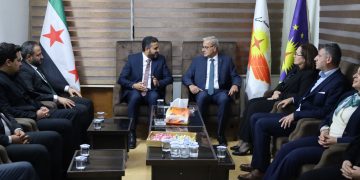









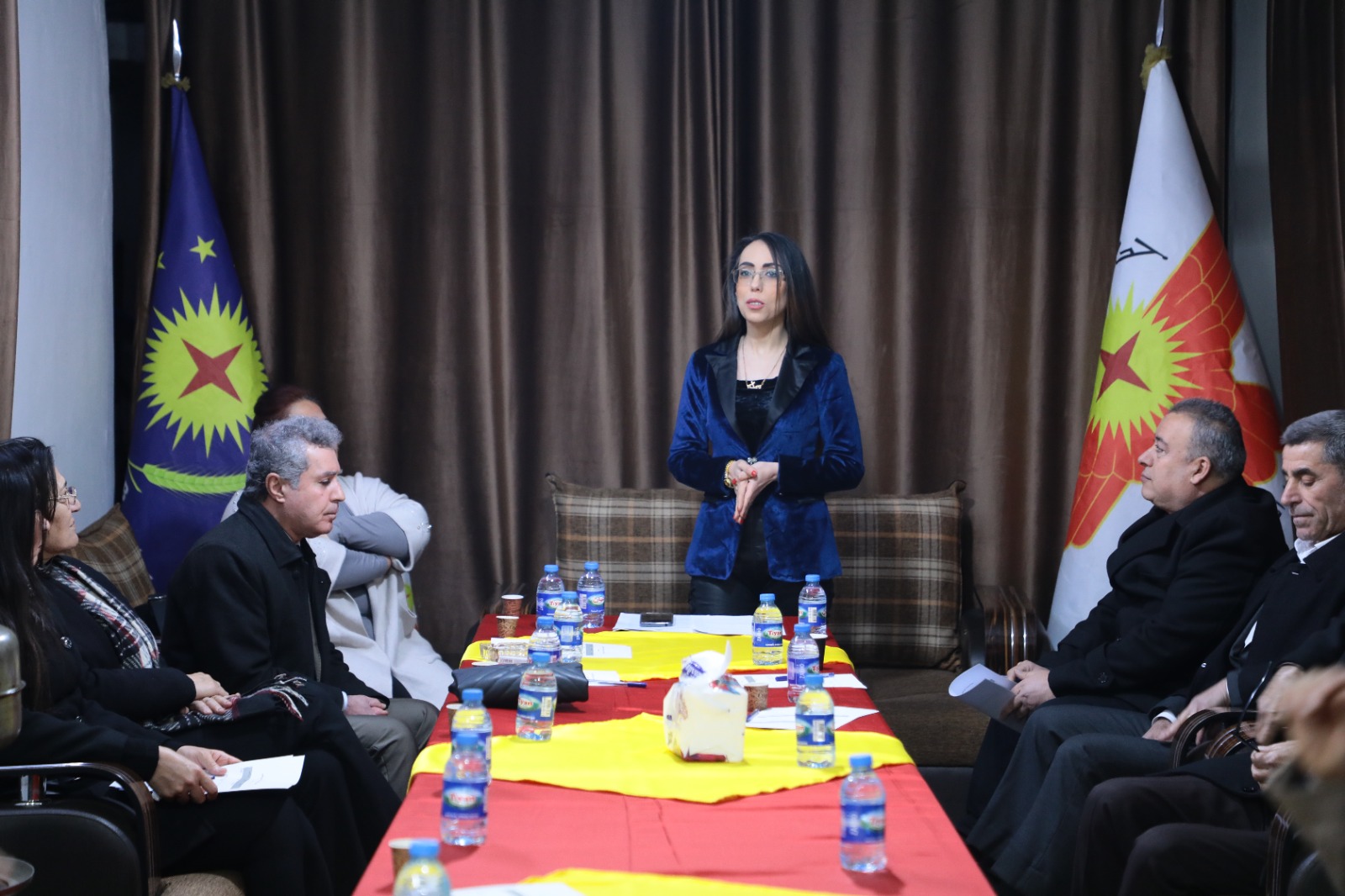
The Syriac Union Party held a dialogue session on the rights of the Syriac people under the Syrian Constitution at the party’s headquarters in Qamishli.
The session was attended by representatives of various national parties of our people, church and community institutions, as well as prominent figures from the Syriac–Assyrian people.
The session was divided into several main themes, most notably:
a historical reading of Syrian constitutions and the rights of components; the necessity of recognizing identities to ensure national unity; a critical reading of modern constitutions and the constitutional declaration; political participation of Syriac–Assyrian parties; decentralization and its role in ensuring a constitution that protects the language, culture, and representation of components, including the Syriacs; equal citizenship and national and religious pluralism; the difference between formal equal citizenship and citizenship based on the recognition of individual and collective rights; the fundamental rights of our people that must be constitutionally recognized, such as language, education, and political representation; and the role of political parties, civil society, and churches in the constitutional process and in drafting constitutional amendments, as well as mechanisms that ensure the effective participation of components in the drafting of any new constitution.Title
The Syriac Union Party in Qamishli Holds a Dialogue Session on the Rights of the Syriac People under the Syrian Constitution
Details
The Syriac Union Party held a dialogue session on the rights of the Syriac people under the Syrian Constitution at the party’s headquarters in Qamishli.
The session was attended by representatives of various national parties of our people, church and community institutions, as well as prominent figures from the Syriac–Assyrian people.
The session was divided into several main themes, most notably:
a historical reading of Syrian constitutions and the rights of components; the necessity of recognizing identities to ensure national unity; a critical reading of modern constitutions and the constitutional declaration; political participation of Syriac–Assyrian parties; decentralization and its role in ensuring a constitution that protects the language, culture, and representation of components, including the Syriacs; equal citizenship and national and religious pluralism; the difference between formal equal citizenship and citizenship based on the recognition of individual and collective rights; the fundamental rights of our people that must be constitutionally recognized, such as language, education, and political representation; and the role of political parties, civil society, and churches in the constitutional process and in drafting constitutional amendments, as well as constitutional mechanisms that ensure the effective participation of components in the drafting of any new constitution.
The session included interventions and open discussions by attendees and concluded with a set of outcomes and recommendations presented by participants, including proposals for new constitutional principles that guarantee the rights of components and strengthen equal citizenship within the current constitutional declaration.
The session included interventions and open discussions by attendees and concluded with a set of outcomes and recommendations presented by participants, including proposals for new constitutional principles that guarantee the rights of components and strengthen equal citizenship within the current constitutional declaration.